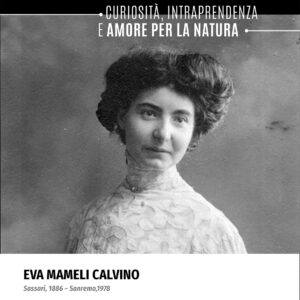
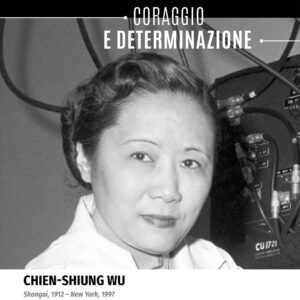
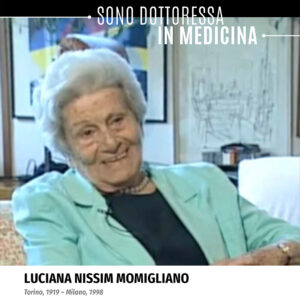
The double challenge: being a female scientist and being a scientist woman.
Lise Meitner
(Vienna, 07/11/1878 - Cambridge, 27/10/1968)
Historical context
Between the late 19th century and the start of World War I, Germany excelled in physics, chemistry, medicine, and engineering thanks to universities and research centers such as the Kaiser-Wilhelm-Gesellschaft. As in many Western countries, women were not allowed to enroll in universities until 1908, but with many limitations, especially in scientific fields. Furthermore, there were rules or customs requiring celibacy among women academics or public sector employees.
The First World War promoted the employment of women in science and engineering to fill the gap in men serving at the front, and the 1919 Constitution of the Weimar Republic declared that “men and women have the same fundamental rights and responsibilities.”
Women’s right to vote, equality between the sexes in civil rights, non-discrimination against female employees in the bureaucracy, maternity rights, and equality in marriage were proclaimed. However, women’s interest in science continued to be considered “unnatural” and their careers were penalized in favor of their male colleagues.
With the rise of Nazism, prevailing sexism and anti-Semitism halted the advances made by women in advancing their rights, revoking those granted during the Weimar Republic. The Nazi Party decreed that “women could not be admitted either to the executive branch or to the administrative committee,” pursuing a policy of confining women to the roles of mother and wife and excluding them from all positions of responsibility, particularly in politics and academia.
A massive propaganda campaign was launched aimed at “liberating women from female emancipation” [1]. What is sad to remember is that Hitler owed part of his political rise to the support of women who were more integrated into the world of German high society [2].
Biography
Born in Vienna in 1878 into a large Jewish family, Lise Meitner described her childhood as exceptionally culturally stimulating. A lifelong avid pianist, she excelled in mathematics and science. Since women were not allowed to enroll in universities in Austria at the time, she completed her studies to become a teacher. However, times changed, and in 1901 she was admitted to the University of Vienna, distinguishing herself as the only female student. She studied under Ludwig Boltzmann and immediately realized that studying physics would be her life’s work.
Her family, like many bourgeois families of the time who were integrated into Viennese society, had abandoned Judaism and baptized their children. Lise became a Protestant in 1908.
After receiving her doctorate in 1905 and the suicide of her mentor Boltzmann, Lise began working with Boltzmann’s assistant, Stefan Mayer, who was studying radioactivity. She quickly acquired skills and experience, and since her future in Vienna seemed uncertain, she asked her parents for permission to move to Berlin to attend Max Planck’s lectures, which he accepted despite his reservations about women at the university. In her free time, she began frequenting Heinrich Rubens’ experimental physics laboratory, where she met chemist Otto Hahn. Hahn became her brother-in-law. Together, they began working on the physics and chemistry of radioactive substances at the Kaiser Wilhelm Institute for Chemistry, where she worked for over thirty years, focusing on nuclear physics.
At first, it was difficult. Access to the Chemistry Institute was barred to women, and Lise was only allowed to use the basement, where a small laboratory for measuring radiation was set up. She was barred from other areas of the Institute and had to use the restrooms of a nearby restaurant. Even when the restrictions were eased, colleagues at the Institute greeted Lise and Otto with a simple “Good morning, Mr. Hahn” when they encountered them in the corridors.
During World War I, from 1914 to 1916, he volunteered as an X-ray technician in the Austrian army. He was also among the first to establish safety and protection standards for the use of radiation.
In 1918, he and Hahn identified element 91, called protactinium.
In 1923, he discovered the production of electrons when X-rays eject orbital electrons. This phenomenon was later called the “Auger effect,” named after the French physicist Pierre Auger, who discovered it independently two years later.
In 1926, she was appointed Professor Extraordinary, the first woman in Germany, at the University of Berlin. She had built a life she loved: she could work in a well-equipped laboratory among excellent colleagues and students.
Hitler’s rise to power initially did not jeopardize the work of the Berlin group, partly because Lise Meitner, an Austrian Protestant, did not believe things could degenerate. However, after the annexation of Austria in March 1938, she was forced to secretly flee Germany because of her Jewish origins. She managed to save her life, but lost everything else: her job, her academic position, and, to a large extent, her scientific reputation. She moved to Stockholm to work at the Nobel Institute for Experimental Physics, under the direction of Manne Siegbahn, but neither joined their research group nor formed her own. Meitner had no official title; she received a modest grant from the Swedish Academy of Sciences and had her own space, but no collaborators, equipment, or even a set of keys, as she later recalled. She continued her collaboration with Hahn and Strassmann through correspondence.
In 1934, Enrico Fermi and his collaborators had produced radioactive isotopes through neutron bombardment of uranium, initially interpreted as the production of transuranium elements. Lise Meitner had persuaded Otto Hahn and Fritz Strassmann to further explore possible explanations for this phenomenon, which was being explored not only by Fermi and his group in Rome, but also by the Joliot-Curies in Paris. Over the next four years, Lise, Otto, and Fritz made interesting but enigmatic discoveries.
In November 1938, Otto Hahn met secretly with Lise Meitner in Copenhagen. Following her suggestions, upon his return he began a series of experiments with Fritz Strassmann on a product of uranium bombardment that they believed to be radium. They discovered that it was actually barium, which had about half the atomic mass of uranium and whose presence they could not explain. Christmas was just around the corner, and Otto wrote to Lise to share his discovery and ask for help in understanding it. At the same time, he began preparing an article for publication in Naturwissenschaften (it would be published in January 1939). Upon receiving the letter, Lise Meitner, who was on vacation with her nephew Otto Robert Frisch, and he and he attempted to explain the result using Bohr’s “liquid drop” model of the nucleus; together, they defined the phenomenon as nuclear fission, which was subsequently described in Nature in February 1939 in an article that also addressed the issue of the resulting energy release during the process.
In 1944, Hahn and Strassmann were awarded the Nobel Prize in Chemistry for the discovery of nuclear fission, without giving deserved recognition to the fundamental contributions of Meitner and Frisch. This was likely because Hahn kept it a secret due to their “escape” from Germany, and perhaps also because Siegbahn himself, who resented a female scientist, objected to the Nobel Committee. Although many, including Hahn himself, subsequently acknowledged Lise Meitner’s crucial role, the error of not awarding the Nobel Prize was never officially corrected. It was only partially mitigated by the awarding of the Fermi Prize (USA Atomic Energy Commission) to Hahn, Meitner, and Strassmann in 1966.
Meitner’s decisive contribution to the discovery of fission from beginning to end is beyond any reasonable doubt. However, the racial laws that forced her to flee Germany made it impossible for her to sign the Hahn and Strassmann publication, making it dangerous for Hahn to maintain ties with her. For a long time, Hahn denied both his close collaboration with a non-Aryan exile and Meitner’s earlier, decisive contribution—a self-deception driven by fear. Hahn’s dishonesty distorted the memory of this discovery and nearly cost Lise Meitner her place in history. Even after the fall of Nazism, Hahn found it unnecessary and considered it disadvantageous to correct Meitner’s account of the discovery of fission.
Privately, Meitner described Hahn’s behavior as “a simple suppression of the past” and added: “I was part of that suppressed past.”
However, Lise Meitner, except in a few brief statements, avoided discussing her life, her difficulties, or her betrayed friendship. Fortunately, her writings and a wealth of archival material have provided insight into the scope of her work and the challenges she faced throughout her career.
She received numerous other honors, including admission as a Foreign Fellow of the Royal Society in 1946, and of the Swedish, Vienna, and Berlin Academies of Sciences, among others; the Leibniz Medal from the Berlin Academy in 1924; and the Planck Medal from the German Physical Society in 1949.
After the war, she spent a brief period in the United States at the Catholic University of Washington and was proclaimed “Woman of the Year” in 1946 by the Press Association. On that occasion, she was mistakenly hailed as the “mother of the atomic bomb” and it was reported that she had fled Germany with “the bomb plans in her handbag,” although in reality she had contributed nothing, even indirectly, to the research that led to the development of the atomic bomb. He later returned to Sweden, where he obtained Swedish citizenship, and worked as a professor at the Royal Institute of Technology until 1960.
In 1992, element 109 was named Meitnerium in his honor.
https://open.spotify.com/episode/10dkfiSNubTrfRqmfBZFJ8
https://www.aif.it/fisico/biografia-lise-meitner/
[1] These are the words of Propaganda Minister Joseph Goebbels.
[2] Particularly noteworthy are: Helene Bechstein, a German businesswoman. She was Adolf Hitler’s etiquette teacher and the wife of Edwin Bechstein, owner and later majority shareholder of C. Bechstein, a leading piano manufacturer; Elsa Bruckmann, wife of Munich publisher Hugo Bruckmann, who opened her salon to Hitler, the center of Munich’s intellectual and cultural life, and allowed him to meet numerous personalities who were essential to his subsequent rise; Winifred Marjorie Wagner, the English wife of Siegfried Wagner, son of Richard Wagner, director of the Bayreuth Festival from 1930, after her husband’s death. She was a friend and supporter of Hitler, himself a Wagner enthusiast, and she and Hitler maintained a regular correspondence until the end of the Second World War.