Scuola primaria, Scuola secondaria di I grado, Scuola secondaria di II grado, Universitari, Pubblico generico
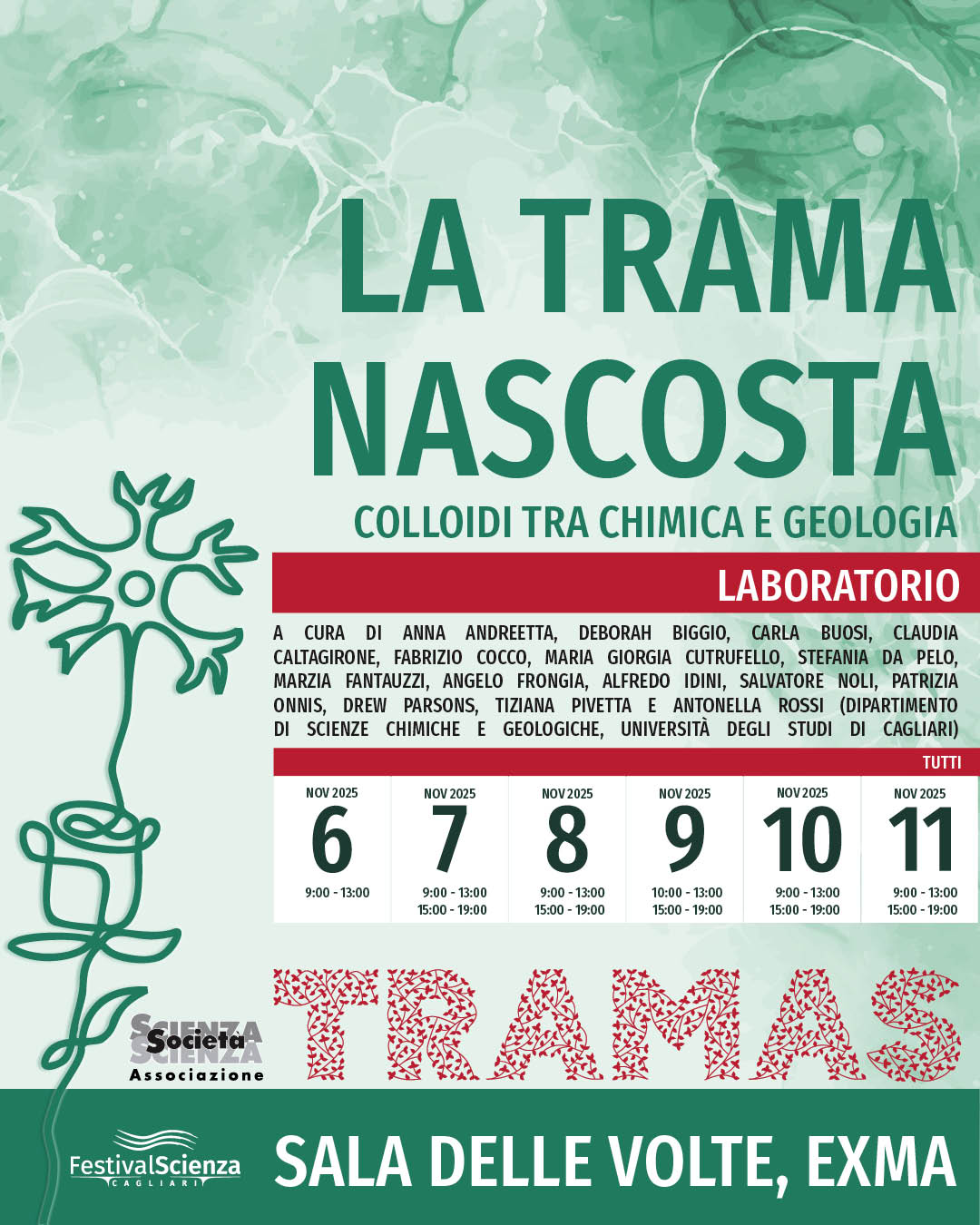
EXMA
By: Anna Andreetta, Deborah Biggio, Carla Buosi, Claudia Caltagirone, Fabrizio Cocco, Maria Giorgia Cutrufello, Stefania Da Pelo, Marzia Fantauzzi, Angelo Frongia, Alfredo Idini, Salvatore Noli, Patrizia Onnis, Drew Parsons, Tiziana Pivetta, and Antonella Rossi (Department of Chemical and Geological Sciences, University of Cagliari)
Colloids, consisting of microscopic particles suspended in a medium, are a fundamental component in many chemical and geological processes. These systems, often invisible to the naked eye, possess unique properties that make them essential in regulating complex chemical reactions. Their ability to influence the transport of elements and nutrients in soils is crucial for the health of ecosystems, ensuring fertility and agricultural sustainability.
The chemistry of colloidal systems has led to the development of new techniques for cleaning works of art and in cosmetics, with eco-sustainable products whose performance surpasses that of traditional products. Another important “interplay” is with the controlled release of drugs and the immobilization of molecules in capsules and gel-like matrices. Furthermore, the importance of colloids in cooking cannot be overlooked: from milk to mayonnaise to gelatin.
In geology, colloids play a key role in the formation of rocks and minerals. The deposition and aggregation of colloidal particles contribute to the creation of unique geological structures, while their dynamic behavior allows for the study of erosion and sedimentary processes. Their ability to capture and transport pollutants also highlights their importance in the study of pollution and environmental remediation technologies.
Colloids are true protagonists of an interconnected world where chemistry, geology, and technology merge to understand our relationship with the environment and improve our quality of life. Their complexity invites us to explore their potential further, revealing unexpected connections and extraordinary practical applications.
Field: Chemistry and Geology
Duration: 30 minutes
Target: Scuola primaria, Scuola secondaria di I grado, Scuola secondaria di II grado, Universitari, Pubblico generico