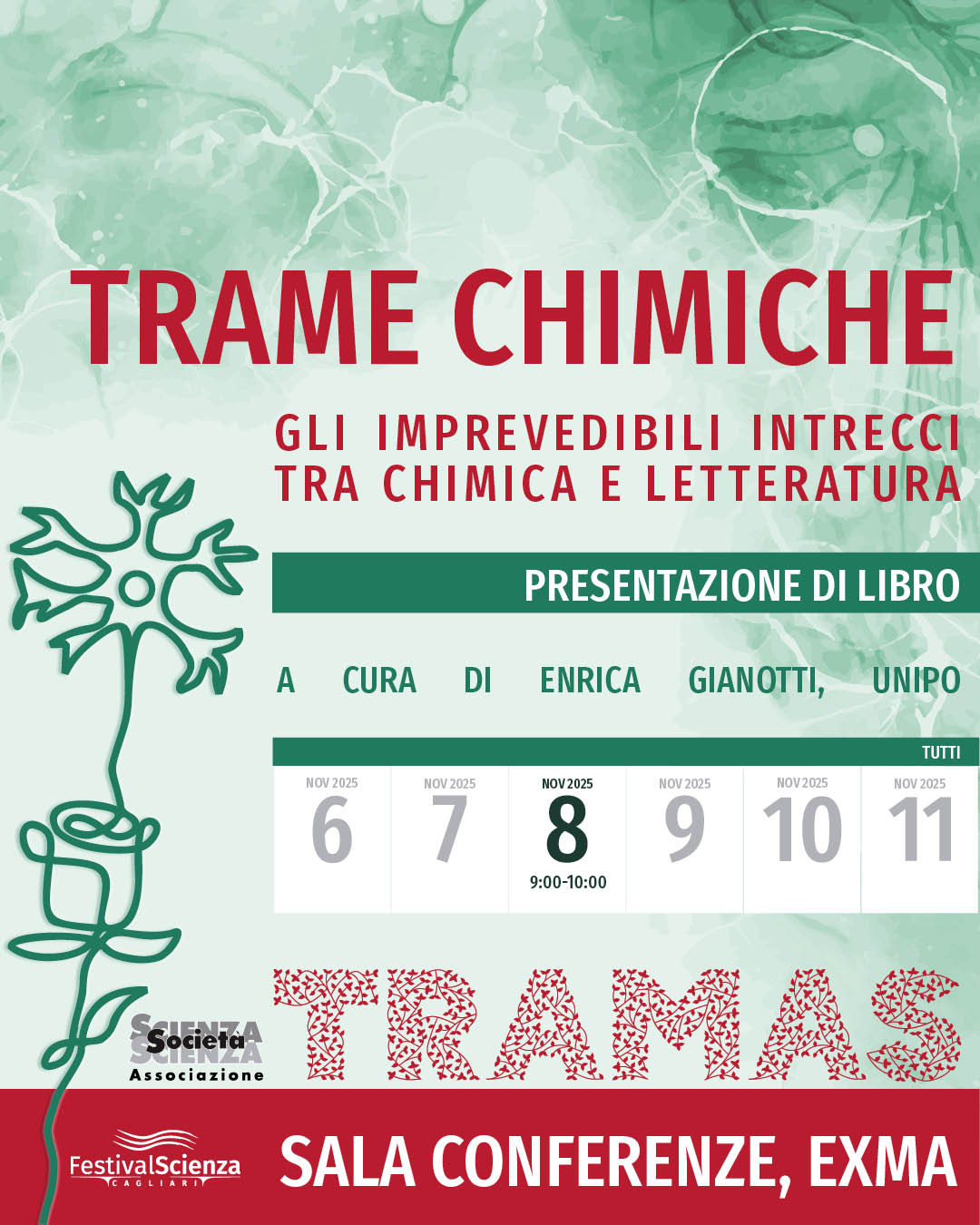
The unpredictable connections between chemistry and literature
Presentazione di libro
Scuola primaria, Scuola secondaria di I grado, Scuola secondaria di II grado, Universitari, Docenti, Pubblico generico
EXMA
By: Enrica Gianotti
What is the relationship between chemistry and literature? When did this partnership begin and how has it evolved? These questions give rise to Trame Chimiche, a chronological and thematic journey that explores the connections, influences, and reflections between words and science. The journey begins with “unconscious chemistry,” rooted in the metallurgical arts and ancient medicine, where empirical experience anticipates the future discipline. At the same time, the “primacy of words” emerges, that is, the power of language to define reality and knowledge, culminating in their symbolic synthesis in alchemy. From here, chemistry’s progressive liberation from linguistic myth translates into symbols and technical language.
When chemistry enters everyday life, literature adopts it as a metaphor for human relationships and a key to understanding progress. It explores its potential and fears, alternating enthusiasm and second thoughts. Trame Chimiche also analyzes the role of the laboratory and the issue of gender, highlighting how science becomes a space for representation and reflection on identity.
In the twentieth century, chemistry transformed: from knowledge to technique, and techniques took on a predominant role. The project asks what this shift entailed—an impoverishment of thought or a new way of knowing? The allure of chemistry, with its fantastical and wondrous component, continues to nourish the imagination, offering literature tools to explore human desires and mysteries. Chemical Traces thus traces a path of illusions, connections, and reflections, leaving two questions unanswered: will chemistry be able to recover a shared meaning with literature? And will literature succeed in creating new paradigms in which science is not just a tool, but a driving force?
Enrica Gianotti
A graduate in Chemistry, she is an Associate Professor of Physical Chemistry at the Department of Sustainable Development and Ecological Transition at the University of Eastern Piedmont.
Aharon Quincoces: A graduate in Philology from the University of Barcelona, he is an essayist and novelist.
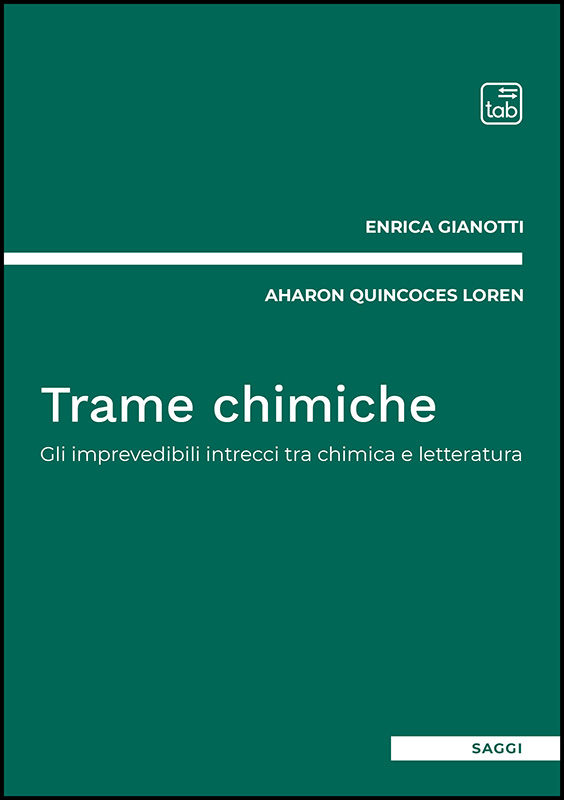
Chemical plots
The unpredictable connections between chemistry and literature
TAB Edizioni
What is the relationship between literature and chemistry? When did this partnership begin? What forms did it take, and how did it evolve? Chemical Traces begins here, developing along a dual track, chronological and thematic, tracing a path filled with illusions, references, and reflections on chemistry as a cognitive model and its interactions with literature. A journey that uncovers unpredictable plots, unexpected connections, and transversal concepts: from the Bible to DeLillo, via Goethe.
Field: Chemistry
Duration: 1 hour
Target: Scuola primaria, Scuola secondaria di I grado, Scuola secondaria di II grado, Universitari, Docenti, Pubblico generico